2026 2nd International Conference on Intelligent Transportation and Future Mobility (ITFM 2026) Concluded Successfully in Xi’an
Building a New Ecosystem of “Smart Connectivity, Green Mobility, and Convergent Innovation”
[Xi’an, China] April 12, 2026 –2026 2nd International Conference on Intelligent Transportation and Future Mobility (ITFM 2026) came to a successful close at the Weiyang Campus of Xi’an Technological University. Under the theme “Smart Connectivity, Green Mobility, and Convergent Innovation,” the conference brought together nearly 200 experts, scholars, engineers, and industry professionals from over 30 universities, research institutions, and enterprises worldwide. Through keynote speeches, oral presentations, and online–offline interactions, participants engaged in in-depth discussions on cutting-edge topics including autonomous driving, vehicle–road cooperation, large-scale traffic models, and low-carbon mobility, injecting new momentum into academic innovation and industrial deployment in the field of intelligent transportation.

I. A Gathering of Leading Minds – A High-Level International Academic Event
This conference was hosted by Xi’an Technological University and attracted experts and scholars from renowned domestic universities such as Tsinghua University, Tongji University, Xi’an Jiaotong University, Dalian University of Technology, Chang’an University, and Beijing Jiaotong University, participating either in person or online. The academic atmosphere was vibrant and the exchanges were lively.
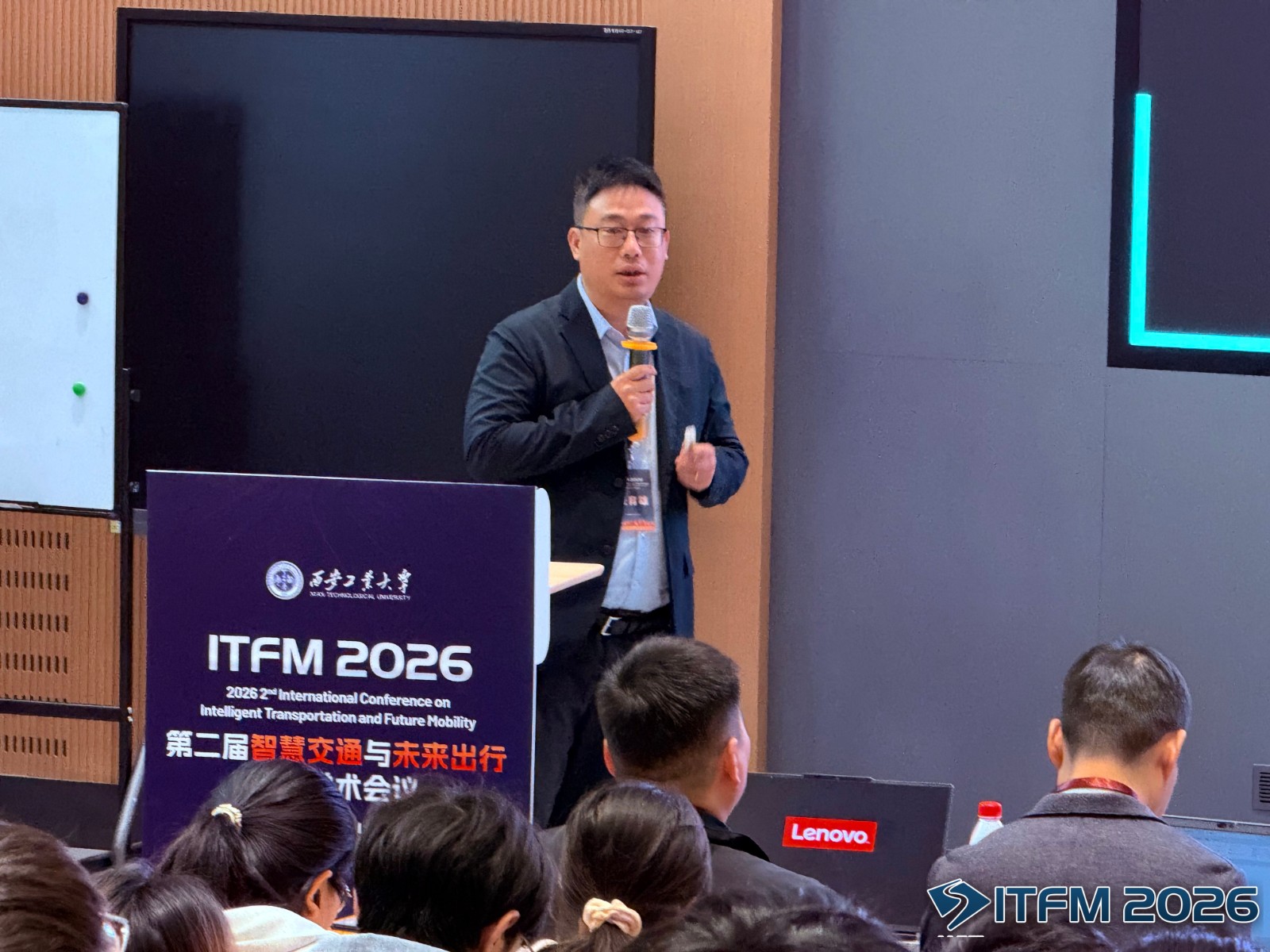
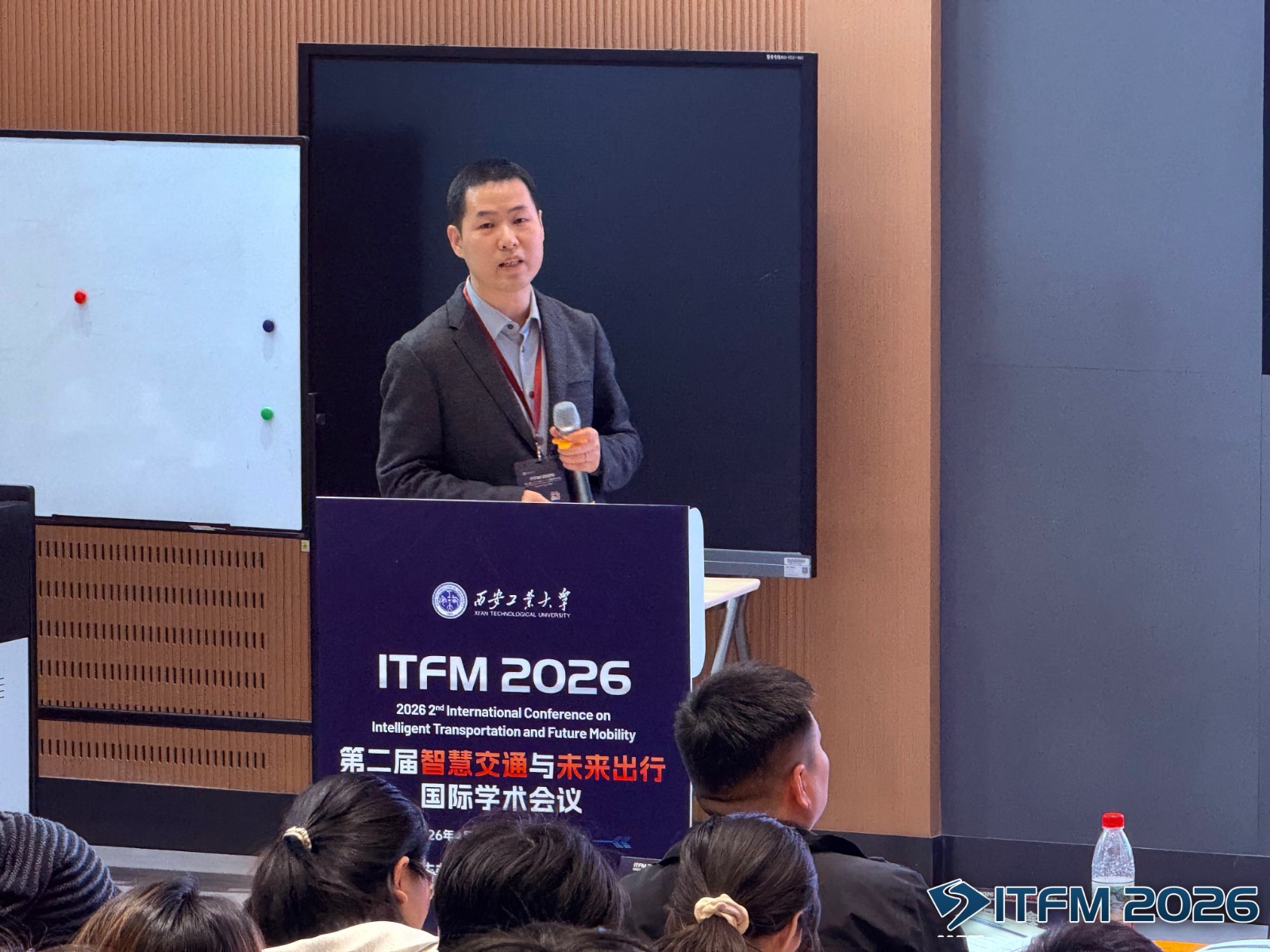
The conference was opened by Associate Professor Ruohai Di, Vice Dean of the Interdisciplinary Innovation Research Institute of Xi’an Technological University. Professor Peng Wang, Vice President of Xi’an Technological University and Conference General Chair, delivered a welcome address. He expressed his hope that the conference would serve as a platform for intellectual exchange and open collaboration, jointly promoting verifiable, trustworthy, and sustainable future mobility technologies. He also highly recognized the conference’s international vision and academic value, and wished the event great success.


II. Intellectual Exchanges – Keynote Speeches at the Frontier of Research
The conference featured six distinguished experts from leading universities and research institutions, delivering keynote speeches covering autonomous driving safety testing, port intelligent collection and distribution, 3D environmental perception, large traffic models, lightweight object detection, freight carbon emissions, and trustworthiness assessment of perception data:
Assoc. Prof. Shuo Feng (Tsinghua University) presented Equivalent Acceleration Testing and Sustainable Optimization for Autonomous Vehicle Safety, systematically explaining how scenario reconstruction and intelligent sampling can overcome the “curse of rarity,” providing a new paradigm for safety validation of high-level autonomous driving.
Prof. Yuxiong Ji (Tongji University) spoke on From Intelligent Control to Autonomous Operation: Key Technologies for Highway Collection and Distribution Systems in Large Container Ports, sharing the integrated “control platform + smart heavy truck” practice at Yangshan Port and envisioning AI empowered autonomous port logistics.
Prof. Meng Yang (Xi’an Jiaotong University) addressed Efficient and Robust 3D Environment Perception for Autonomous Mobile Robots, presenting his team’s latest breakthroughs in multimodal fusion and occupancy representation, tackling perception challenges in open, dynamic scenes.
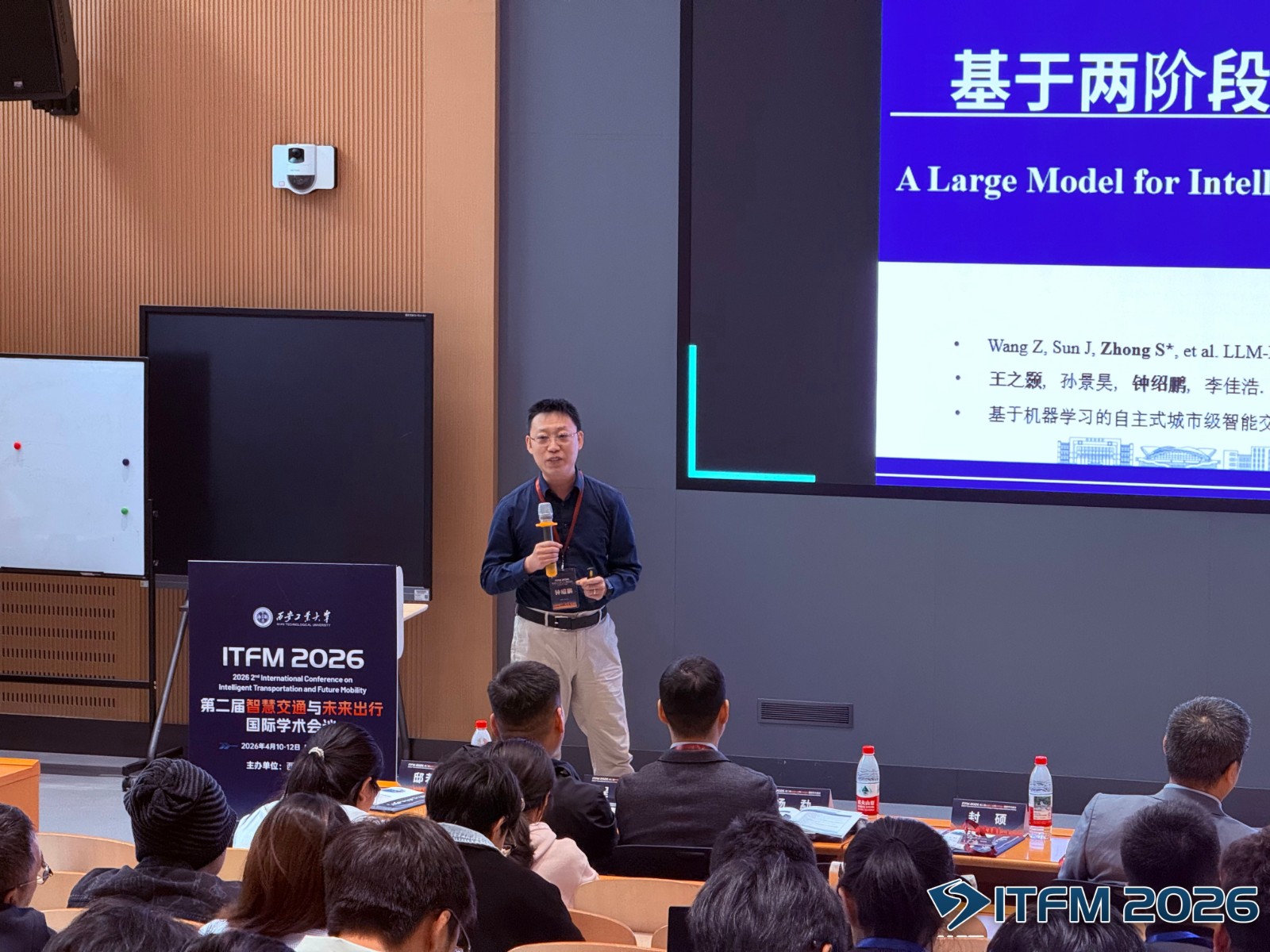
Prof. Shaopeng Zhong (Dalian University of Technology) proposed A Two Stage Fine Tuning Approach for Large Scale Intelligent Traffic Signal Models, combining large language models with reinforcement learning to achieve explainable and highly generalizable traffic signal control.
Prof. Xin Cheng (Chang’an University) reported on From Precision Optimization to Real Time Deployment: Key Lightweight Real Time Object Detection Technologies for Traffic Scenes, demonstrating lightweight methods such as the CSP multi scale edge perception module and adaptive cross scale fusion feature pyramid network that balance accuracy and speed.
Assoc. Prof. Zhipeng Peng (Xi’an Technological University) presented Freight Big Data Driven Spatiotemporal Characteristics and Influencing Factors of Carbon Emissions, using multi source data and explainable machine learning to reveal spatial clustering and temporal differentiation of heavy duty truck carbon emissions.
The speeches were insightful and well-received, sparking lively on site and online discussions.



III. Deep Integration – Oral Presentations Sparking Innovative Ideas
In the afternoon, parallel oral presentation sessions were held, moderated by young faculty members of Xi’an Technological University. Eleven early career researchers from Beijing Jiaotong University, Civil Aviation University of China, Chang’an University, Jimei University, University of Nottingham Ningbo China, and Xi’an Technological University presented their latest research findings. The presentations were solid and original, fully reflecting the vibrant and cross disciplinary momentum in the field of intelligent transportation.
IV. Fruitful Outcomes – Jointly Forging a New Future for Smart Transportation
The successful conclusion of this conference has established a high level platform for global scholars and engineers in the fields of intelligent transportation and future mobility. It not only showcased the latest research achievements in autonomous driving, vehicle–road cooperation, large scale traffic models, and green low carbon technologies, but also promoted the deep integration of government, industry, academia, research, and application. Many young scholars commented that the keynote speeches and discussions were highly inspiring for their own research directions and project proposals.
As the host, Xi’an Technological University fully leveraged its distinctive strengths in military industrial research, artificial intelligence, and data science. The university’s Shaanxi University Military Civil Integration Science and Technology Innovation Alliance and the Institute of Artificial Intelligence and Data Science provided solid support for research on trustworthiness assessment and multi source data fusion in intelligent transportation.
Looking ahead, the conference organizing committee will continue to uphold the principles of openness, collaboration, and innovation, gathering global wisdom and deepening international cooperation to accelerate the transition of intelligent transportation technologies from breakthrough to large scale application. We look forward to meeting you again at the Third International Conference on Intelligent Transportation and Future Mobility (ITFM 2027), jointly writing a new chapter for the future of mobility.
With this, the Second International Conference on Intelligent Transportation and Future Mobility (ITFM 2026) has drawn to a successful close. We extend our sincere thanks to all participating experts, scholars, staff members, and volunteers for their great support. Let us join hands to create a brighter tomorrow for smart transportation!